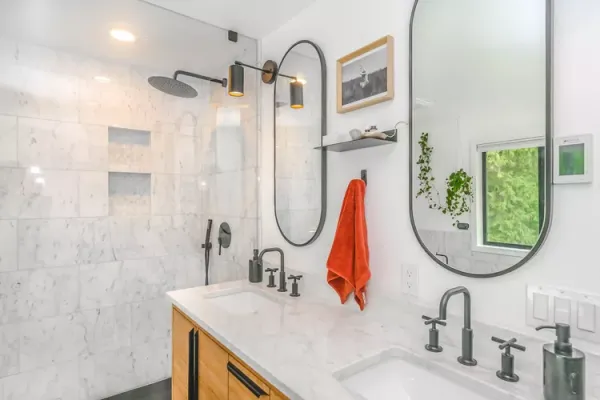
Adding a dedicated light inside a shower enclosure does more than brighten a dim corner—it reduces slip-and-fall risks, makes cleaning easier, and turns the shower into a design focal point. But not every fixture works in a wet environment. The National Electrical Code (NEC) 2020, section 410.10(D), mandates that any light located within eight vertical feet of a shower must be marked as suitable for damp or wet locations. That single rule shapes most decisions when homeowners or contractors pick shower lighting.
General bathroom lighting often falls short inside the enclosure, where shadows hide soap scum or a razor. By installing a fixture directly in the shower, you gain clear visibility for shaving, scrubbing, and moving safely. The ceiling is the most common placement because it keeps the light away from direct water spray and simplifies wiring access.
Main Types of Wet-Rated Shower Lights
Recessed lights dominate the category, but they come in several forms. Traditional fixed recessed units feature a sealed trim that keeps water out, with the housing and junction box tucked into the ceiling plenum—the space between the drywall and the floor above. They are inexpensive, widely available in various sizes and finishes, and straightforward to install. The downside: they occupy significant plenum space and may not be rated for insulation contact.
Low-profile, or “can-less,” recessed lights are a newer option. They sit less than a quarter-inch from the ceiling surface, with only a shallow protrusion into the plenum, which often allows insulation contact. Because they lack a bulky housing, you can cluster several in a small ceiling. However, they are always LED, and while LED bulbs consume less power, the stark white light may not suit everyone. Many models include adjustable color temperature switches to mimic warmer incandescent tones, and dimmers can soften the intensity.
Gimbal recessed lights offer flexibility: the bulb swivels 360 degrees and tilts up to 40 degrees, letting you aim light exactly where needed—even toward a wall for a washed glow. This makes them ideal for sloped ceilings. The trade-off is cost, often up to three times that of fixed units, and some light loss when fully tilted.
Surface-mount fixtures, though less common, work when ceilings are high enough. They illuminate the entire shower rather than a focused spot, but style choices are limited to plain white circles or squares. Note that even surface-mount lights require an electrical box in the plenum.
Key Factors in Choosing a Fixture
Size matters: common recessed diameters are 4, 5, 6, and 7 inches, and the fixture should look balanced relative to the shower’s dimensions. Wattage affects brightness—most bathrooms do well with 60-watt incandescent equivalents or 7-to-9-watt LEDs, though 75-watt bulbs suit larger spaces. Dimmers help adjust levels if 60 watts feels harsh.
Color temperature influences mood and function. Cool, bright light (labeled daylight or cool white) aids tasks like makeup application and shaving, while warm, yellow light feels more relaxing for baths and late-night visits. If you choose cool light, consider adding a dimmer to soften it.
Water resistance is non-negotiable. Damp-rated fixtures tolerate moisture but not direct water contact; wet-rated fixtures have fully sealed wiring and can handle splashes. In showers, wet-rated is the safer, more common pick. Trim finishes range from white to bronze, nickel, or black, allowing coordination with other bathroom fixtures.
Boosting Light Without New Fixtures
If installing a shower light isn’t feasible, several strategies can increase general bathroom illumination. Swap a shower curtain for a glass enclosure—especially frameless glass, which transmits more light. Lighter-colored shower surrounds and bathroom paint reflect more light. Rotating gimbal recessed lights in the main bathroom toward the shower can help. Replacing a cloudy ceiling dome with a clear one—or simply cleaning it—also makes a noticeable difference.
For those weighing lumens, a 40-watt incandescent bulb emits about 450 lumens, while a 60-watt produces 800 lumens. As a rule of thumb, aim for 50 to 80 lumens per square foot for the entire bathroom. Ultimately, the right shower light balances safety, visibility, and style—and always respects the NEC’s wet-location requirement.