For those living in compact apartments or cozy houses, the challenge of making a space feel larger often seems daunting without undertaking costly renovations. However, interior designers say that strategic decorating choices can dramatically alter the perception of square footage. By focusing on light, color, furniture placement, and clever storage, even the smallest rooms can appear more open and inviting.
Three design professionals—Arin Agase, a Chicago-based decorator and content creator at Happily Inspired; Elizabeth Vergara, owner of the New York design and construction firm Vergara Homes; and Kathy Kuo, founder and CEO of the home decor brand Kathy Kuo Home—shared their go-to methods for maximizing spatial perception. Their advice centers on simple, achievable changes that any homeowner or renter can implement.
Light and Color as Spatial Tools
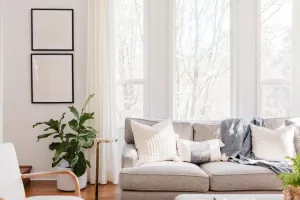
One of the most immediate ways to open up a room, according to Kuo, is to amplify natural light. She recommends placing wall mirrors strategically to reflect light and add depth, describing them as both functional and decorative. “Playing with light to your advantage will make a small room feel airier and more inviting,” she said.
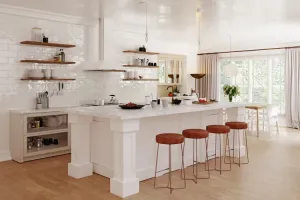
Paint color also plays a pivotal role. Kuo advises opting for lighter shades—white, beige, or soft pastels like blue, pink, and green—because they reflect light and create an illusion of expansiveness. In contrast, darker colors can make a space feel heavier and more confined. For even better light reflection, the designers suggest painting the ceiling in a matching soft shade.
Furniture Selection and Layout
Elizabeth Vergara emphasizes that furniture size and arrangement are critical in small spaces. “Keep furniture scaled to the size of the room, and avoid oversized pieces which can dominate the space,” she said. She also advises arranging pieces to maximize flow and keep pathways open, such as moving sofas and chairs away from walls to improve circulation. Choosing furniture with exposed legs can further enhance the sense of openness by revealing more floor area.
Multifunctional furniture is another favorite among the designers. Kuo highlights storage ottomans that double as seating, coffee tables with shelving underneath, and media cabinets with ample drawers. “Any time you can bring in something that serves multiple functions is a win for a small space,” she noted. These pieces help reduce clutter and keep floor space free, which visually enlarges the room.
Vertical Thinking and Window Treatments
Arin Agase points out that while small homes have less floor area, they often have the same vertical space as larger ones. She encourages clients to “think out of the box” and utilize tall, narrow nooks for storage or shelving. For instance, console tables can be placed in unconventional spots, and ladder shelves can hold pottery or cutlery while adding vertical storage.
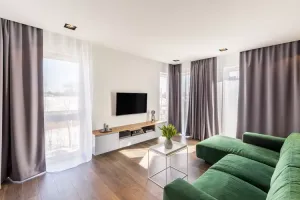
Window treatments also contribute to the illusion of height. Agase recommends hanging curtain rods as close to the ceiling as possible, regardless of the room size or curtain length. She suggests using sheer, lightweight curtains in white or natural linen to allow light to filter through while maintaining an airy feel. “Curtains will instantly elevate an entire space,” she said.
These six strategies—maximizing natural light, choosing light paint colors, selecting appropriately scaled furniture, incorporating multifunctional pieces, utilizing vertical space, and installing chic curtains—offer a practical roadmap for anyone looking to make their home feel larger without structural changes. By applying these designer-approved techniques, small space dwellers can transform their interiors into more comfortable, visually expansive environments.